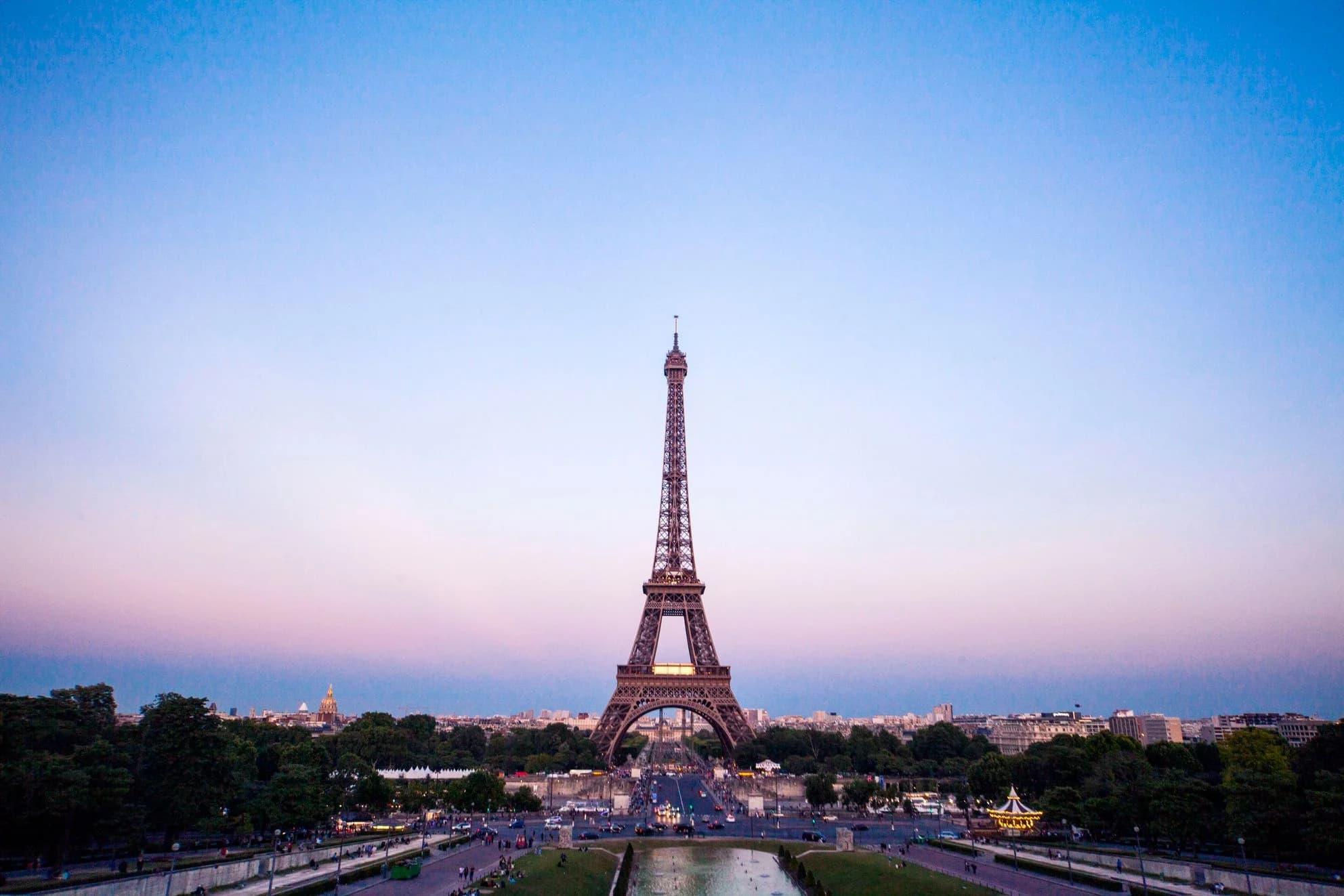
Three days in Paris, countless places to discover. From sunrise views of the Eiffel Tower to Montmartre’s winding streets and the cafés of Le Marais, this practical itinerary combines famous landmarks, local food recommendations, and thoughtfully planned routes to help you experience Paris without rushing.
Paris has a way of making even ordinary moments feel special. A morning coffee at a pavement café, a walk along the Seine, or the Eiffel Tower appearing unexpectedly between two buildings can be just as memorable as visiting a famous museum.
But with only three days in Paris, deciding what to see — and how to fit everything together — can feel overwhelming.
Should you spend half a day at the Louvre? Is Montmartre worth visiting? Where can you enjoy a good French lunch near the Eiffel Tower without ending up at a tourist restaurant?
The secret to a memorable Paris trip isn't trying to see everything. It's choosing experiences that matter to you and organizing them into a route that makes sense.
This 3-day Paris itinerary combines iconic landmarks, charming neighborhoods, specific food recommendations, and quieter corners worth discovering.
You'll explore the Eiffel Tower and Seine, visit the Louvre and Notre-Dame, wander through Montmartre, and discover the historic streets of Le Marais.
And you'll still have time to slow down and enjoy Paris.
Sacré-Cœur, Montmartre's backstreets, Place des Vosges, Rue des Rosiers
Best for: First-time visitors, couples, and friends.
Travel style: A mix of walking, sightseeing, food, and relaxed exploration.
Recommended pace: Moderate.
Getting around: Mostly walking, with a few Métro journeys.
Before you go: Book the Eiffel Tower and Louvre in advance if you plan to enter.
The suggested times are flexible. Adjust them to your ticket reservations, the weather, and your preferred travel pace.
Ready to make this Paris trip yours?
Start with Paris selected, then personalize the trip around your dates, interests, and travel style.
Day 1: Eiffel Tower, the Seine, and Classic Paris
Your first day focuses on the Paris you've probably imagined: grand monuments, beautiful bridges, elegant streets, and that unmistakable silhouette of the Eiffel Tower.
Rather than jumping between distant attractions, you'll explore western Paris before finishing at the Arc de Triomphe.
9:00 AM – Start with the Eiffel Tower View from Trocadéro
Start your morning at Trocadéro, one of the best places to admire the Eiffel Tower.
From the terraces overlooking the Seine, the tower rises above the gardens with surprisingly little between you and one of the world's most recognizable landmarks.
The view is impressive at any time, but mornings can be particularly pleasant before the busiest sightseeing hours.
Walk down through the Trocadéro Gardens, stopping at the fountains and viewpoints along the way.
Allow: 45–60 minutes.
Worth knowing: The area around the main viewing terrace gets crowded. Moving down into the gardens gives you different photographic angles and often a little more breathing room.
Planning tip: If you're visiting the summit, allow extra time for security checks, queues, and the ascent. Your lunch may need to start later than 12:30 PM. If you're only admiring the tower from outside, you'll have more time to explore Rue Cler or the Champ de Mars.
Alternative: Not interested in going up? Spend more time exploring the Champ de Mars gardens or enjoy a leisurely coffee nearby.
You can still have a wonderful first day in Paris without climbing the tower.
One of the pleasures of Paris is discovering how different the city looks from its riverbanks.
Elegant buildings rise above the water, sightseeing boats pass beneath historic bridges, and the atmosphere changes as you move away from the busiest landmarks.
Make your way toward Pont Alexandre III, one of Paris's most beautiful bridges.
Its golden sculptures, decorative lamps, and views toward Les Invalides make it worth a stop.
Allow: 60–90 minutes, including photographs and breaks.
Alternative: If you've already walked enough, consider a Seine river cruise. It offers a different perspective without adding more kilometers to your day.
From the river area, take public transport toward Charles de Gaulle–Étoile.
The Arc de Triomphe stands at the center of one of Paris's most remarkable urban layouts, where broad avenues radiate outward from the monument.
From street level, it's impressive.
From the rooftop, the views are even better.
If you decide to climb, you'll see the Champs-Élysées stretching toward Place de la Concorde and the modern skyline of La Défense in the opposite direction.
Allow: 45–90 minutes.
Important: Use the pedestrian underpass to reach the monument. Never cross the surrounding roundabout.
Evening – Dinner and the Eiffel Tower After Dark
If you still have energy, consider returning toward the Eiffel Tower after sunset.
The illuminated tower is a completely different experience from the morning view.
After nightfall, the Eiffel Tower's sparkling lights create one of Paris's most memorable sights. The display usually lasts five minutes at the beginning of each hour, although the final illumination depends on the current lighting schedule.
For dinner, choose somewhere convenient to your accommodation rather than traveling across Paris just to reach another famous restaurant.
Day 1 practical summary
Route: Trocadéro → Eiffel Tower → Rue Cler → Seine → Pont Alexandre III → Arc de Triomphe.
Estimated walking: Approximately 5–7 km, depending on detours and transport choices.
Main transport: Métro or bus between the Seine area and Arc de Triomphe.
Book ahead: Eiffel Tower; Arc de Triomphe if you want rooftop access.
Best for: Famous landmarks and classic Paris views.
Day 2: The Louvre, Notre-Dame, and the Latin Quarter
Today is about the historic heart of Paris.
You'll move from the grand galleries of the Louvre to the streets around Notre-Dame, finishing among the bookshops and cafés of the Latin Quarter.
This is one of the most rewarding days for travelers who enjoy art, architecture, and history.
The Orangerie is conveniently located near the Tuileries Garden, making it relatively easy to substitute into this itinerary.
The Musée d'Orsay requires a slightly different route.
Planning note: Both the Louvre and Orangerie are normally closed on Tuesdays, while the Musée d'Orsay is normally closed on Mondays. Check official opening days before choosing.
After exploring the Louvre, head toward Palais Royal, just north of the museum.
This elegant historic complex offers a quieter atmosphere than the busy Louvre courtyard.
Walk through its peaceful gardens and admire the distinctive black-and-white striped columns in the courtyard.
The surrounding streets are also an excellent place to stop for lunch.
Where to eat:
Le Nemours – A classic Parisian café beside Place Colette, conveniently located near Palais Royal. It's a pleasant place for coffee, a light meal, or simply watching the city go by.
Optional detour: If you'd prefer a garden break, visit the nearby Tuileries Garden before heading east toward Notre-Dame. Its fountains, sculptures, and familiar green chairs make it a lovely place to relax, but the detour adds walking time.
2:00 PM – Walk Along the Seine to Notre-Dame Cathedral
From Palais Royal, head south toward the Seine and follow the river east toward Île de la Cité.
Depending on your route and stops, the walk takes approximately 25–35 minutes.
Along the way, you'll pass historic bridges, beautiful riverside views, and the famous bookstalls known as bouquinistes.
These green stalls have become part of the city's identity, selling books, prints, and souvenirs along sections of the river.
Eventually, you'll reach Notre-Dame.
After the devastating fire of 2019, the cathedral underwent an extensive restoration and reopened in December 2024.
Its Gothic façade, towers, and sculptural details remain among Paris's most impressive sights.
Allow: 45–90 minutes.
Cathedral entry is free, although visitor arrangements and queues can vary.
Tip: Don't rush away immediately after seeing the façade. Walk around the surrounding streets and bridges to appreciate the cathedral from different angles.
As you climb through Montmartre, take time to explore the smaller streets away from the busiest tourist routes.
If you have extra time, make a detour toward Rue de l'Abreuvoir, one of the neighborhood's most picturesque streets, known for its gentle slope and historic buildings.
Otherwise, continue toward Sacré-Cœur and enjoy the views from the hilltop.
Allow: 60–90 minutes.
Local tip: Montmartre is best enjoyed without rushing. The famous viewpoints are beautiful, but some of its most appealing corners are found away from the busiest squares.
L'Annexe Montmartre – A small bistro on Rue des Trois Frères offering seasonal French cooking. A good option if you're looking for a more leisurely meal.
Be prepared for a queue at busy times, and check opening days.
Even if you're not hungry, the surrounding streets are worth exploring.
You'll find independent shops, small courtyards, and plenty of places to stop for coffee.
Allow: 60–90 minutes.
5:00 PM – Explore Le Marais at Your Own Pace
For your final afternoon, leave the schedule open.
Walk along Rue des Francs-Bourgeois, browse small boutiques, or discover the streets around Saint-Paul.
If you enjoy architecture, look for the historic mansions known as hôtels particuliers that give the neighborhood much of its character.
You don't need another major attraction.
After three days of sightseeing, slowing down can be the perfect ending.
Evening – A Final Parisian Dinner
For a classic French meal in Le Marais, consider Au Bourguignon du Marais, known for traditional Burgundy-inspired dishes, including boeuf bourguignon.
Paris is served by Charles de Gaulle and Orly airports, among others.
Both have public transport connections to the city.
Choose your transfer based on your arrival terminal, luggage, and accommodation location.
How Much Does 3 Days in Paris Cost?
Paris can be expensive, but you don't need a luxury budget to enjoy it.
The biggest expense is usually accommodation.
Here are approximate planning ranges for one adult.
Expense
Budget
Mid-Range
Accommodation per night
€70–120
€150–250
Food per day
€25–40
€50–80
Local transport per day
€5–10
€5–15
Attractions per day
€0–25
€25–60
These are illustrative estimates rather than live prices. Accommodation costs vary significantly by season and location.
Estimated Total Cost for 3 Days
Based on these approximate ranges, a three-day stay for one adult might cost:
Travel Style
Estimated Total
Budget
€300–585
Mid-range
€690–1,215
These estimates include three nights of accommodation, three days of food, local transport, and attractions.
They don't include flights, airport transfers, shopping, or additional expenses.
Traveling as a couple can reduce the accommodation cost per person when sharing a room.
Important: Paris hotel prices fluctuate significantly depending on the season, events, and how far in advance you book.
How to Save Money
Buy breakfast from local bakeries.
Use public transport for longer journeys.
Enjoy free parks and viewpoints.
Look for lunch menus instead of expensive dinners.
Check museum discounts and free-admission eligibility.
Book accommodation early during popular travel periods.
Some of Paris's best experiences, including walking beside the Seine and exploring historic neighborhoods, are completely free.
Best Time to Visit Paris
Spring: March to May
Spring brings blooming gardens and generally pleasant sightseeing conditions.
It's an excellent season for walking, although rain is always possible.
Summer: June to August
Long daylight hours make it easy to spend time outdoors.
However, popular attractions can be crowded, and hot weather can make walking tiring.
Autumn: September to November
Autumn offers colorful parks, cooler temperatures, and a beautiful atmosphere.
September and October are particularly appealing for city breaks.
Winter: December to February
Winter can be cold and damp, but Paris remains enjoyable.
Museums, cafés, and seasonal decorations provide plenty of reasons to visit.
Our suggestion: Consider April, May, September, or October for a first visit, while remembering that pleasant weather and smaller crowds are never guaranteed.
Practical Tips for Your First Paris Trip
Book Popular Attractions Early
The Eiffel Tower and Louvre can sell out for popular time slots.
Book ahead if visiting them is a priority.
Check Museum Closing Days
The Louvre and Musée de l'Orangerie are normally closed on Tuesdays.
The Musée d'Orsay is normally closed on Mondays.
Plan your museum day accordingly.
Don't Try to See Everything
Paris rewards travelers who leave room for spontaneous discoveries.
Choose a few priorities each day rather than filling every hour.
Keep Your Belongings Secure
Be mindful of pickpockets in crowded areas and on public transport.
Keep valuables secure, particularly around major tourist attractions.
Learn a Few French Phrases
A simple bonjour when entering a shop or café is appreciated.
Useful expressions include:
Bonjour – Hello.
Merci – Thank you.
S'il vous plaît – Please.
Au revoir – Goodbye.
Keep Your Itinerary Flexible
Rain, unexpected queues, and restaurant opening hours can affect your plans.
Having alternatives makes the trip more enjoyable.
Is 3 Days in Paris Enough?
Yes, three days is enough to experience many of Paris's highlights.
You won't see everything, but you can explore famous landmarks, visit a major museum, discover historic neighborhoods, and enjoy the city's food and atmosphere.
The key is organizing your days geographically.
Instead of constantly crossing the city, group nearby attractions together.
And remember that a memorable trip doesn't require visiting every famous place.
Sometimes a quiet café or unexpected street can be the highlight of your day.
Frequently Asked Questions
What is the best way to spend 3 days in Paris?
For a first visit, spend your first day exploring the Eiffel Tower, Seine, and Arc de Triomphe. Dedicate your second day to the Louvre, Notre-Dame, and Latin Quarter. On your third day, discover Montmartre and Le Marais.
Grouping attractions by neighborhood helps reduce travel time and leaves more room for spontaneous discoveries.
What should I not miss during 3 days in Paris?
For a first visit, prioritize the Eiffel Tower, Louvre or another major museum, Notre-Dame, Montmartre, and a walk along the Seine.
Is Paris walkable?
Yes, many central neighborhoods are very walkable.
However, some attractions are several kilometers apart, so combining walking with the Métro is usually best.
Is it worth going inside the Eiffel Tower?
If panoramic views are important to you, the experience can be worthwhile.
However, you can still enjoy the Eiffel Tower from Trocadéro, Champ de Mars, and the surrounding streets without purchasing an ascent ticket.
Is the Louvre worth visiting for first-time visitors?
The Louvre is extraordinary, but it isn't essential for everyone.
If you prefer Impressionist art or a smaller museum, consider the Musée d'Orsay or Musée de l'Orangerie.
Do I need to book attractions in advance for Paris?
Booking ahead is strongly recommended for popular attractions such as the Eiffel Tower and Louvre, especially during weekends and peak travel seasons.
Other experiences, including walking through Montmartre, exploring Le Marais, and enjoying views along the Seine, don't normally require reservations.
How much money should I bring for 3 days in Paris?
Your budget depends on accommodation, dining preferences, and paid attractions.
For three days and three nights, an illustrative budget is approximately €300–585 for budget travel or €690–1,215 for a mid-range trip, excluding flights and airport transfers.
Can I visit Paris without speaking French?
Absolutely.
English is commonly spoken in major tourist areas, hotels, and attractions.
Learning a few French phrases can make everyday interactions more pleasant.
Make Your Paris Itinerary Your Own
Three days in Paris means making choices.
You might prefer spending an entire morning exploring the Louvre instead of rushing through its galleries. Perhaps you'd rather skip the Champs-Élysées and spend more time in Montmartre. Or maybe discovering cafés and local food matters more to you than visiting famous monuments.
There's no single perfect itinerary for everyone.
But what if you'd rather spend more time exploring museums? Or skip the busiest attractions in favor of quieter neighborhoods, local food, and hidden gems?
Instead of starting your planning from scratch, choose Paris, select your travel dates and preferences, and let Smart Journey create a personalized day-by-day itinerary.
Whether you're interested in art, architecture, food, or simply wandering through beautiful streets, your itinerary can reflect the experiences you enjoy most.
Spend less time planning and more time experiencing Paris.
Ready to make this Paris trip yours?
Start with Paris selected, then personalize the trip around your dates, interests, and travel style.
Planning Another European City Break?
If Paris is part of a longer European adventure, explore our other destination guides:
Each city has its own personality, history, and unforgettable experiences.
Final Thoughts
Three days in Paris won't reveal every corner of the city, but that's part of its charm.
You'll admire the Eiffel Tower, wander through historic neighborhoods, discover beautiful architecture, and enjoy some of the experiences that make Paris special.
But the moments you remember most might not be the ones you planned.
They might be a quiet morning in Montmartre, an unexpected view of the Seine, or a long lunch that turns into the highlight of your afternoon.
Plan the essentials, leave room for surprises, and enjoy the journey.